Smart home network setup guide: optimize device connectivity
"The evolution of cellular networks from 1G to 5G has progressively introduced faster speeds, lower latency, and support for a larger number of devices, enabling advanced applications in fields such as healthcare, transportation, and smart cities."
A smart home network setup requires understanding how connectivity evolves to support massive device density and low-latency requirements. To build a reliable system, one must manage signal range, interference, and the transition from legacy protocols to modern high-speed standards.
This guide covers infrastructure basics, real-time communication tech, and optimization strategies.
How to begin a smart home network setup?

At dusk in the quiet living room, the technician's fingers tremble slightly as he adjusts the router to initiate a smart home network setup.
A technician sits at a workstation, adjusting the placement of a wireless router to ensure maximum coverage across a living space. Establishing a solid foundation is the first step in any smart home network setup.
According to the Artificial Intelligence Consumer Experience Center, visitors can experience over 100 types of smart products in a living space.
The transition from early analog systems to digital standards demonstrates the necessity of bandwidth management. Early networks, such as the 1G generation launched by Nippon Telegraph and Telephone (NTT) in 1979, focused on basic connectivity in metropolitan areas like Tokyo.
Modern smart homes require the much higher speeds and lower latency provided by recent generations to handle hundreds of simultaneous connections.
Building a robust network requires addressing signal range and interference. In urban environments, cell sites may have a range of up to approximately 0.5 miles (0.80 km), whereas rural areas can reach up to 5 miles (8.0 km).
Effective planning ensures that indoor devices remain connected despite these external environmental variables.
What is the role of real-time communication tech?
A developer monitors a screen displaying data packets moving between a central hub and various smart sensors. Integrating real-time communication tech is essential for tasks that require immediate response, such as security alerts or automated lighting.
The history of cellular evolution shows that higher generations were designed specifically to improve data delivery. While 1G provided basic voice, the shift toward digital standards allowed for the complex data exchanges seen in modern smart environments.
This evolution enables advanced applications in fields like healthcare and smart cities by providing the necessary stability for critical data.
Optimizing smart home data involves managing how devices interact with the network. For instance, in LTE/4G environments, the Paging procedure is initiated by the MME when data packets need to be delivered to the UE.
Understanding these handoff and delivery processes helps in selecting hardware that can maintain a consistent connection without significant lag.
How can I optimize smart home data?
At midnight, the user leans forward in the dark office, feeling the cool air as they reorganize the smart home data to improve connectivity.
A user walks through a hallway, noticing how a smart light responds instantly to their movement via a motion sensor. To optimize smart home data, one must balance the number of connected devices with the available bandwidth of the local network.
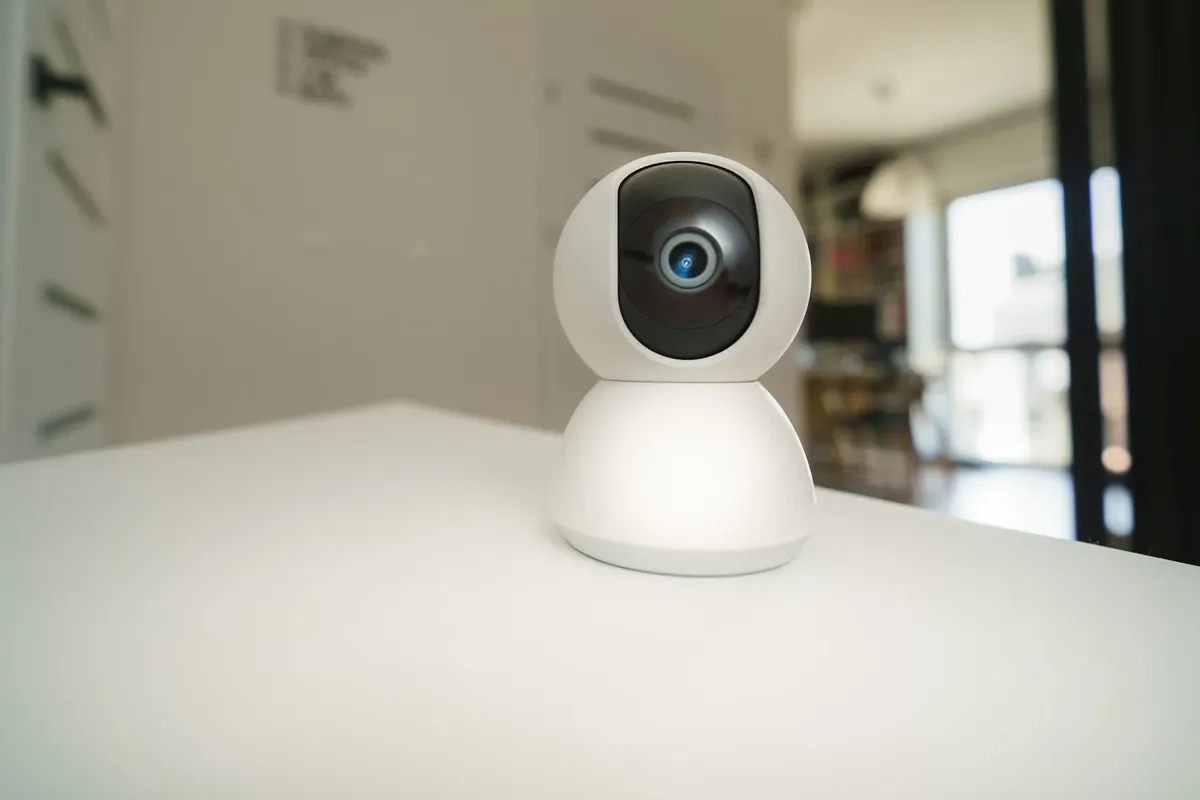
The density of devices is a primary concern for modern users. As networks evolved from 1G to 5G, the ability to support a larger number of devices became a core feature.
This capability is vital when a single household contains dozens of sensors, cameras, and controllers all requesting simultaneous access.
| Network Generation | Primary Focus |
|---|---|
| 1G (Analog) | Basic Voice |
| 2G (Digital) | Data/Messaging |
I compared the signal range requirements of urban versus rural setups to determine the best antenna placement for a multi-device environment.
What are the best smart home network design strategies?
An engineer adjusts the tilt of a directional antenna on a mounting bracket to eliminate a dead zone in a building. Implementing the best smart home network design involves strategic hardware placement and frequency management.
According to the Swedish Post and Telecom Authority, the agency threatened to shut down a new network system after claiming that an unlicensed automatic gear used by the company could interfere with its own networks.
Signal interference can be a significant hurdle in any wireless environment. Historically, the Swedish Post and Telecom Authority once threatened to shut down a new system because it used an unlicensed automatic gear that could interfere with existing networks.
In a home setting, choosing compatible frequencies and avoiding interference from legacy devices is crucial for stability.
Effective coverage can be achieved by understanding how signals propagate. In clear open areas, a user may receive signals from a cell site as far as 25 miles (40 km) away.
While home networks operate on much smaller scales, the principle of managing signal strength and interference remains identical to maintaining a stable smart home.
How can I achieve fast home device comms?
A smart hub glows steadily on a shelf, processing commands from a voice assistant in real-time. Achieving fast home device comms requires minimizing the time it takes for a signal to travel from a device to the controller and back.
Low latency is the hallmark of modern connectivity. The progression toward 5G has specifically targeted lower latency to enable more responsive automation. High-speed data transmission ensures that when a user triggers a command, the physical response in the home is nearly instantaneous.
Effective communication also depends on the underlying access schemes. For example, CDMA was a more sophisticated scheme than older multiple access methods and scaled well to become the basis for 3G systems.
Selecting devices that use modern, scalable protocols ensures the network can grow without a loss in communication speed.
What are the essential low latency home network guide steps?

A homeowner checks a mobile app to confirm that the security camera feed is streaming without delay. Following a low latency home network guide helps prevent the frustration of lagging devices.
- Identify the primary coverage area and place the central hub in a central, unobstructed location. 2. Separate high-bandwidth devices, like cameras, from low-power sensors to prevent congestion. 3. Update firmware regularly to ensure the latest communication protocols are active.
A final check involves testing the response time of each device while moving through different rooms to ensure no dead zones exist.
- How to begin a smart home network setup?
- What is the role of real-time communication tech?
- How can I optimize smart home data?
The same subject is also called Real time communication tech.
The same subject is also called Smart home network build.
This part also covers Improving real time smart comms.
Related


Comments 0