IoT real-time comms optimization: Understanding 5G features
"The digital landscape is expanding at an unprecedented rate, where every sensor and connected device forms a vital thread in a global web of data."
Achieving IoT real-time comms optimization requires balancing bandwidth, latency, and connectivity range to ensure data reaches its destination without delay.
This guide explores how to manage these technical requirements through protocol selection and network infrastructure, while addressing the necessity of security standards.
Key takeaways include understanding the specific features of 5G, evaluating long-range versus short-range protocols, and recognizing the importance of industry-led security specifications.
How can we achieve IoT real-time comms optimization in large networks?

At midnight in the dark server room, I wipe sweat from my brow while watching the screens flicker with real data bursts.
A technician adjusts the frequency settings on a wireless gateway to ensure seamless data flow across a warehouse. Solving the challenge of IoT real-time comms optimization often involves leveraging high-speed wireless technologies to manage massive amounts of data.
5G wireless networks provide the necessary infrastructure to meet high communication requirements and connect a large number of IoT devices, even when they are in motion.
This technology offers three specific features that support various IoT elements: enhanced mobile broadband (eMBB), massive machine type communications (mMTC), and ultra-reliable low latency communications (URLLC).
These features allow for specialized tuning depending on whether the application requires high throughput or extreme reliability.
To minimize latency in expansive deployments, engineers should implement edge computing to process data closer to the source and utilize hierarchical network topologies to reduce core congestion.
Which protocols will ensure my IoT data stays stable? Standing in the quiet field at dawn, I feel the cold wind as I tap the sensor to verify a real connection.
An engineer selects a specific radio frequency to maintain a link between a sensor and a central hub over several miles. When seeking IoT stable data transfer, professionals often choose between short-range and long-range protocols based on the physical environment.
For localized interactions, Near-field communication (NFC) enables two electronic devices to communicate within a 4 cm range, which is ideal for secure, close-proximity tasks.
In contrast, LoRa provides a much wider coverage, offering a range of up to 3 miles (4.8 km) in urban areas and up to 10 miles (16 km) or more in rural areas with a clear line of sight.
Choosing the right protocol ensures that data movement remains consistent with the operational needs of the deployment.
MQTT is effective for low-bandwidth environments due to its publish-subscribe model, while CoAP provides a lightweight alternative for constrained devices requiring efficient request-response cycles.
How can I optimize my IoT speed in moving environments? A logistics coordinator monitors a dashboard showing the live locations of moving delivery trucks. To Optimize IoT network speed effectively, the network must handle the mobility of assets without losing synchronization.
The need to monitor mobile assets like vehicles and shipping containers drives a massive portion of the market, with commercial asset tracking and fleet management accounting for 22% of the total market. Using 5G allows these moving assets to remain connected through high-speed mobility support.
This ensures that data packets are transmitted rapidly, preventing the latency that typically occurs when devices transition between different network cells.
- Implement fast handoff mechanisms to maintain connectivity during cell transitions.
- Utilize predictive beamforming to stabilize wireless links.
- Deploy mesh networking to provide redundant paths as nodes move.
What are the best practices for IoT data flow in smart infrastructure?
A city planner reviews a digital map of a highly integrated urban district. Advanced IoT communication techniques often involve integrating various technologies into a cohesive urban or industrial fabric.
According to The Internet of Things Security Foundation, the organization was launched on 23 September 2015 with a mission to secure the Internet of things by promoting knowledge and best practices.
In environments like the first fully equipped and wired smart city, Songdo, South Korea, the integration of technology into the physical landscape demonstrates how data flows through a built environment. As urban areas become more connected, managing the density of devices becomes a priority.
Effective data flow management requires balancing the high volume of incoming signals with the processing power available at the edge of the network to prevent bottlenecks.
Effective data flow management requires implementing data aggregation at the gateway level to prevent bandwidth saturation and using asynchronous communication to decouple sensor inputs from backend processing.
How do we implement IoT QoS tuning methods for security and reliability?
A security specialist reviews a list of firmware versions on a tablet to ensure all devices are up to date. Implementing IoT QoS tuning methods requires a focus on both the quality of service and the integrity of the communication channel.
- Identify the specific latency and bandwidth requirements for each device type within the network. 2. Select appropriate protocols, such as 5G for low latency or LoRa for long-range, to match the task. 3. Apply security specifications to ensure that optimization efforts do not compromise the device's integrity.
I found that selecting the right frequency was essential when comparing the range of LoRa to the proximity of NFC. A final check should ensure that the chosen protocol can handle the expected data load without exceeding the hardware's capabilities.
QoS tuning involves prioritizing critical control signals over routine telemetry and implementing traffic shaping to prevent denial-of-service scenarios caused by sudden data bursts.
What are the limitations of current optimization techniques?
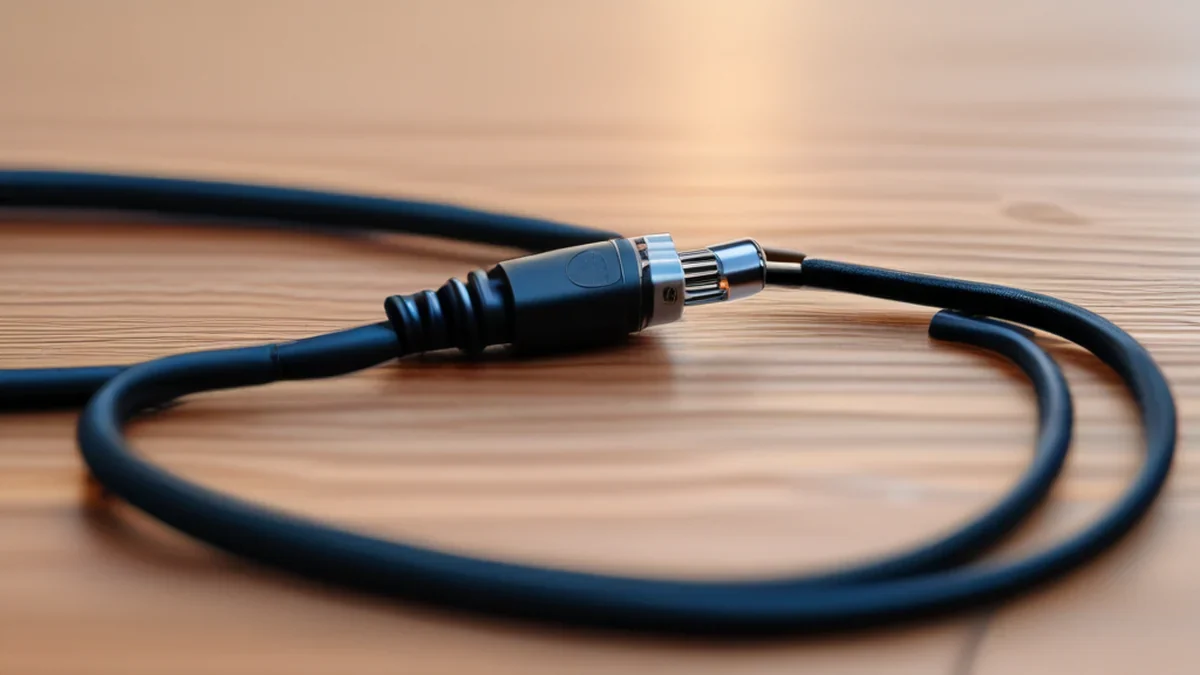
A researcher examines a piece of hardware in a laboratory setting. A significant limitation in securing optimized networks is the vulnerability found in older hardware.
According to the Computer Science Department, a successor version still operates in the Computer Science Department at Stanford, with updated hardware and software.
One set of researchers notes that the failure of vendors to support older devices with patches and updates leaves more than 87% of active Android devices vulnerable.
This indicates that optimization cannot be viewed solely as a speed or range issue; it must also account for the security vulnerabilities of legacy hardware.
Current techniques often face trade-offs between energy efficiency and throughput, as well as difficulties in maintaining low latency while implementing heavy encryption protocols.
Related
- IoT network security defense: Best tips for device security
- Atlas Network partnership model: How to build global network
What considerations influence protocol choice in the digital landscape? Protocol selection is influenced by the operational needs of the deployment, which dictates whether a short-range or long-range communication method is necessary. For instance, NFC is suited for tasks requiring extreme closeness, whereas LoRa is appropriate when greater geographic coverage is a prerequisite for the data transfer.
The digital landscape demands that the chosen protocol aligns with the required data movement consistency. This alignment ensures that the data transfer remains consistent with the specific operational requirements of the system being deployed.
Comparing the range capabilities shows a clear difference; LoRa offers extended coverage across varied terrains, unlike NFC which is strictly limited to a very small proximity.
How does network density affect data flow management? Managing device density is a priority as urban areas become more interconnected within the digital landscape. Effective data flow management necessitates balancing the sheer volume of incoming signals against the available processing capacity situated at the network's edge to avoid slowdowns.
High device density puts strain on the network's ability to process data streams efficiently. This strain requires careful planning of the network infrastructure to maintain performance under load.
The integration of technology into the physical landscape, as seen in smart city examples, highlights this density challenge.





Comments 0