5G frequency band selection guide for best coverage
"Every year millions of electrical and electronic devices are discarded..."
Effective 5G frequency band selection allows users to balance coverage and speed to maintain stable connectivity. This guide covers how to choose the right bands for your environment, the trade-offs between different spectrums, and how to manage signal handovers.
* Understand the difference between low-band and high-band coverage. * Learn how to optimize 5G frequency band selection for specific locations. * Identify the best 5G frequency choice for speed versus range. * Recognize the limitations of current hardware in signal processing.
How does 5G frequency band selection work?
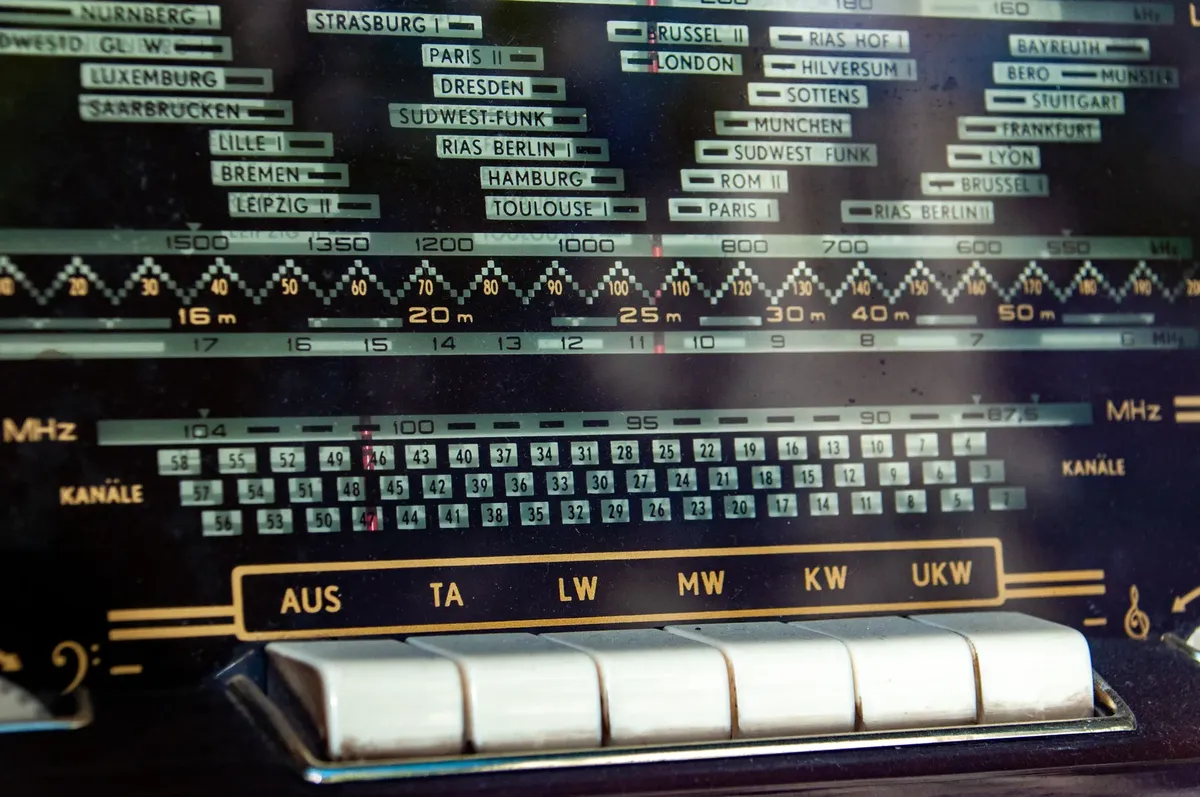
At sunset, the technician squinted at the flickering screen while adjusting the antenna to stabilize the signal frequency.
A technician adjusts the antenna tilt to ensure the signal reaches the intended coverage area. Choosing the right spectrum is the first step in managing a wireless network.
The 5G frequency band selection process depends heavily on the physical environment and the specific needs of the user. Low-frequency bands provide wide coverage and penetrate walls easily, making them ideal for outdoor or large-area connectivity.
In contrast, high-frequency bands, such as millimeter wave, offer massive data capacity but have limited range and struggle with physical obstructions.
The best 5G frequency choice involves matching the band to the density of the users. In a crowded stadium, higher bands are necessary to handle the volume of connections. In a rural setting, lower bands are preferred to maintain the connection over long distances.
Successful network management requires constant monitoring of these shifts.
- Identify the available spectrum in the local area.
- Evaluate the trade-off between coverage range and data throughput.
- Select the optimal band based on current network load.
How to boost 5G data speed through band optimization?
An engineer monitors the throughput on a handheld spectrum analyzer to ensure the link is stable. Speed is often the primary goal when configuring a mobile device or a local cell site.
To boost 5G data speed, users and network administrators often look toward higher frequency spectrums. These bands provide much wider channels, which directly translates to higher peak data rates.
However, using these bands requires a higher density of base stations because the signal does not travel as far as lower frequencies.
Network configuration for 5G often involves carrier aggregation, where the device combines multiple bands simultaneously. By pulling data from both a low-band coverage area and a high-band signal, the device can maintain a high-speed connection while still having a reliable fallback.
This hybrid approach is essential for maintaining consistent performance.
In this sequence, the second step is the most significant.
What are the tips for stable 5G signal tuning in different environments?
A user moves their smartphone near a window to find a stronger signal in a thick-walled building. Environmental factors play a decisive role in how a device perceives the available spectrum.
The most effective way to maintain a connection is to understand how different waves interact with your surroundings. For instance, if you are inside a large office, you might find that a lower frequency provides a more consistent connection despite the lower maximum speed.
- Identify the primary coverage area to determine if you need range or capacity. 2. Check the device's capability to support specific high-frequency bands. 3. Adjust the placement of equipment to minimize physical interference.

I once attempted to optimize a local connection by switching to a higher frequency, only to find the signal dropped whenever someone walked between the device and the router.
This taught me that the best 5G frequency choice is often the one that provides the most stable path, not just the highest number on the screen.
How can selecting bands for real time applications change your experience?
A gamer adjusts the network settings to prioritize low latency over raw download speed. Real-time applications like video conferencing or online gaming require specific network characteristics.
When choosing bands for real time tasks, latency becomes just as important as bandwidth. High-frequency bands often offer lower latency because they can handle rapid data bursts more efficiently. However, if the signal is unstable, the latency will spike, causing lag.
If a user needs to ensure low latency, they should look for a stable, mid-band connection. While low-band is great for coverage, it may not provide the responsiveness needed for sensitive applications. Balancing these factors is key to a smooth user experience.
What is the limitation of current 5G band management?
A technician checks the hardware specifications to see if the antenna can handle higher frequencies. Even with advanced technology, physical laws still limit how we manage wireless signals. According to the WHO (2023), "Every year millions of electrical and electronic devices are discarded ..."

A significant limitation is that hardware capability and environmental physics can prevent the realization of theoretical speeds. Even if a device supports a high-frequency band, the signal might be too weak to be usable in certain indoor settings.
| Feature | Low-Band | High-Band |
|---|---|---|
| Coverage Range | Extensive | Limited |
| Data Capacity | Lower | Much Higher |
The limitation of these optimizations is that signal attenuation in high-frequency bands can make coverage highly inconsistent in complex environments.
The same subject is also called Optimize 5G network bands.
This part also covers How 5G bands affect speed.
How 5G bands affect speed
Related
- QoS tips guide Reduce game lag with QoS for better play
- CCTV network setup: Why Minimize CCTV signal interference
When does signal handover become critical? Signal handover becomes critical when a device moves between areas served by different frequency bands or base stations. The process of managing these transitions ensures that the user maintains an uninterrupted connection as they travel. Successful handover relies on the network accurately predicting the best available spectrum for the device at any given moment.
The trade-off between coverage and speed dictates when a handover is necessary. A device operating on a low-band signal might initiate a handover to a high-band signal if it enters a dense user area where capacity becomes strained.
Conversely, if the high-band signal weakens due to distance, the system might revert to a more stable, lower-frequency connection.
Every year, the movement of users across varied terrains demands sophisticated handover protocols. These protocols must account for the differing propagation characteristics of low-band versus high-band signals to prevent service interruption during transitions.


Comments 0