AI network automation quality: How to boost user experience
"The goal of modern quality management is to move beyond simple inspection and toward a system where quality is built into every stage of the process."
AI network automation quality relies on moving from reactive troubleshooting to proactive, intelligent management. This transition ensures that service reliability is inherent to the network architecture rather than a result of constant manual intervention.
This guide explores how automated systems enhance reliability, the steps for implementation, and the limitations of current technological capabilities.
How does AI network automation quality improve user experience?

At dusk in the quiet office, the engineer sighs in relief as the seamless network stability feels like a gentle breeze against their skin.
An engineer monitors a dashboard where traffic spikes are instantly smoothed by automated adjustments. AI network automation quality ensures that the network anticipates congestion before it impacts the end user.
By analyzing patterns in real-time, the system can reallocate resources to maintain consistent throughput.
According to the FDA's report "Pharmaceutical Quality for the 21st Century: A Risk-Based Approach," the agency has implemented concepts of QbD into its pre-market processes to ensure quality is built-in. Similarly, AI-driven network optimization uses predictive models to prevent service degradation.
This approach moves the focus from fixing failures to preventing them through intelligent resource management.
AI-driven network optimization allows the system to act on data before a human operator even notices a deviation. This capability ensures that latency remains low and availability remains high even during unpredictable traffic surges.
An automated network quality boost is achieved through these continuous, micro-adjustments.

In this sequence, the second step is the most extensive.
What makes up AI network self-management? A technician watches as a software agent identifies a faulty node and reroutes traffic without human input. AI network self-management involves a closed-loop system where the network senses, decides, and acts. This cycle minimizes the downtime that often plagues traditional manual configurations.
The process functions through a series of intelligent feedback loops. First, the system gathers massive datasets from various network elements. Second, it processes this data to identify anomalies or potential bottlenecks. Finally, it executes corrective actions to stabilize the environment.
Integrating these elements allows for a more resilient infrastructure. Enhancing user network feel is possible when the network can self-heal from minor disruptions. This level of autonomy reduces the operational burden on human engineers while maintaining high service standards.
How do I implement AI-driven network optimization?
In the dim light of the late evening, the manager leans forward to watch the automated network deployment unfold across the screen. A project manager reviews a deployment roadmap that transitions from manual oversight to automated control. Implementing these systems requires a structured approach to ensure stability. The transition must be gradual to prevent unforeseen systemic failures.

- Data Foundation: Establish a comprehensive data collection layer that feeds real-time telemetry into the AI models. 2. Model Training: Develop and test predictive algorithms using historical network data to recognize normal versus anomalous behavior. 3. Closed-Loop Integration: Gradually enable the AI to execute commands on the live network, starting with low-risk optimizations.
I once observed a pilot deployment where we moved from manual routing to automated path selection, and the stability increased immediately. A final check must be performed after every automated change to ensure the network remains within defined operational bounds.
- Data collection and ingestion from network nodes.
- Model training and algorithm refinement.
- Automated policy deployment and closed-loop execution.
How does AI impact service quality in complex environments?
A network administrator observes a sudden shift in global traffic patterns that the automated system handles seamlessly. AI impact on service quality is most visible during complex, large-scale fluctuations. In these scenarios, manual intervention is often too slow to prevent user-perceived outages.
| Feature | Manual Management | AI-Driven Automation |
|---|---|---|
| Response Time | Human-dependent/Slow | Real-time/Instant |
| Predictability | Reactive/Variable | Proactive/Consistent |
The table shows that moving from manual to automated systems shifts the operational paradigm from reactive to proactive. This transition is essential for managing the density and complexity of modern digital infrastructures.
What are the limitations of automated network quality?
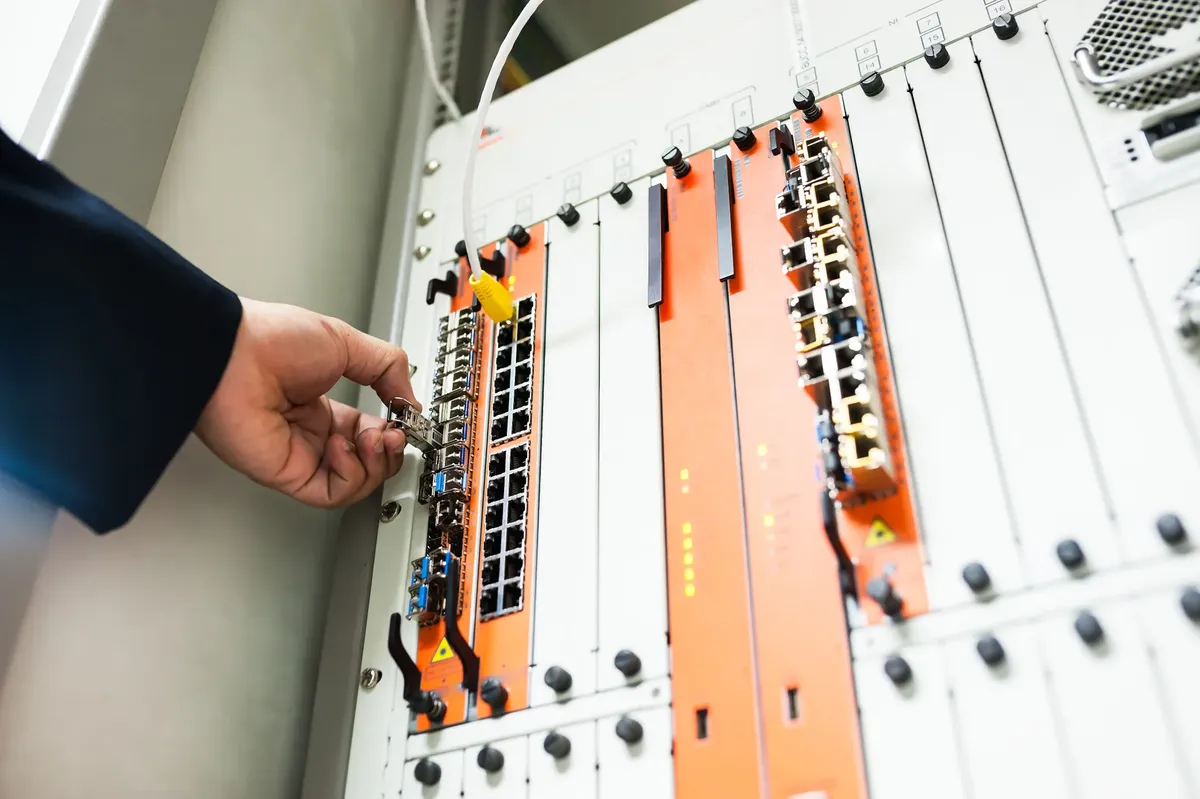
An operator looks at a screen where a unique, unprecedented traffic pattern causes the automation to stall. Despite the intelligence of these systems, they are not infallible. There are specific conditions where automation might struggle or require human oversight.
One limitation is that sorting facilities are still not 100% effective in separating materials, much like how AI models may struggle with entirely novel or "black swan" network events that fall outside their training data.
If the underlying data is flawed or the event is unprecedented, the automation may make incorrect decisions.
Related
- 5G frequency band selection guide for best coverage
- QoS tips guide Reduce game lag with QoS for better play
How does the goal of modern quality management relate to AI automation? The goal of modern quality management emphasizes embedding quality throughout the entire process, a principle mirrored in AI network automation. This integration means that network reliability becomes an intrinsic property of the system design, not merely a post-deployment check. AI systems achieve this by constantly monitoring and adjusting network parameters to maintain desired performance levels.
This proactive stance contrasts sharply with older methods where quality assurance was relegated to after-the-fact inspection. By building quality in, the network avoids the need for extensive reactive troubleshooting.
The AI continuously verifies operational parameters against established benchmarks, ensuring the system adheres to the highest standards.
The transition toward this built-in quality framework requires the same rigorous data foundation mentioned in implementation steps. Accurate, real-time telemetry feeds the AI models, allowing them to make quality-preserving decisions before issues manifest.
What conditions necessitate human oversight in automated systems? Human oversight remains necessary when the network encounters conditions outside the scope of its training data. If an event is entirely novel, the AI lacks the contextual knowledge to apply a correct corrective action. These unprecedented scenarios represent a critical limitation of even the most advanced automation.
When the underlying data feeding the AI models proves flawed, the resulting automated decisions may become incorrect. Such data integrity issues directly compromise the quality of the system's output. Therefore, human review is required to validate the integrity of the input streams.
The comparison between manual and automated response times highlights this dependency; while automation offers instant reaction to known issues, complex, unknown events still demand human judgment.






Comments 0