IoT security guide: VLAN isolation for IoT security
"Security in a connected environment requires clear boundaries to prevent a single compromised device from endangering the entire network architecture."
A robust VLAN isolation for IoT security strategy involves segmenting smart devices into a dedicated virtual network to prevent lateral movement by attackers. This guide explains how to design these segments, manage budget implications, and implement effective network isolation for IoT.
Key takeaways: * Separate IoT devices from the main production network to mitigate security risks. * Monitor cloud and network spending to prevent budget overruns. * Use structured segmentation to ensure manageable and secure connectivity.
How to design IoT VLANs?

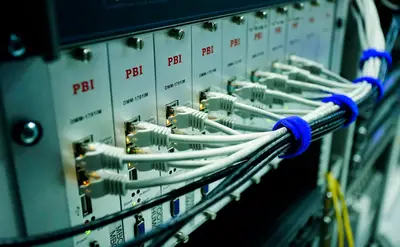
A technician sits at a console, configuring a managed switch to create a distinct broadcast domain for a new set of smart sensors. Setting up a secure environment requires defining specific VLAN IDs that isolate traffic from the primary data plane.
Effective VLAN isolation for IoT security begins with identifying every connected device and assigning it to a specific segment. By creating a dedicated VLAN, you ensure that a vulnerability in a smart camera or sensor does not allow an intruder to access sensitive servers on the main network.
This network isolation for IoT prevents the spread of malware across the organization.
In a report by Gartner, a survey of 200 IT leaders revealed that 69% experienced budget overruns in their organizations' cloud expenditures during 2023. This financial reality highlights the importance of careful planning when expanding network infrastructure.
If you expand your network without strict segmentation, the complexity can lead to unforeseen costs during troubleshooting and management.
A network administrator checks the routing tables to ensure that the IoT VLAN cannot communicate with the corporate subnet without passing through a firewall.
However, the effectiveness of this design is limited if the underlying hardware cannot support sufficient VLAN tagging.
What are the benefits of IoT network separation?
An engineer adjusts the firewall rules, carefully blocking unauthorized traffic between the guest Wi-Fi and the production VLAN. This separation ensures that guest users or unmanaged devices remain trapped within their own digital sandbox.
Implementing IoT network separation provides a layer of defense-in-depth that protects critical assets. When devices are isolated, the attack surface is significantly reduced because the "blast radius" of a compromise is limited to a single segment.
Secure IoT VLAN design ensures that essential business functions remain operational even if a peripheral device is breached.
The report also reveals that cost savings is the top cloud initiative for 60% of respondents. Maintaining a clear separation between device types allows for more efficient resource allocation.
By grouping similar devices, IT teams can better manage bandwidth and hardware requirements, which aligns with the goal of optimizing operational expenditures.
He adjusts the access control lists to ensure the IoT segment only has outbound access to necessary cloud services.
This section highlights how the second benefit is the most significant.
How to implement effective network isolation for IoT?
A technician carefully plugs a new smart hub into a designated port, verifying that it only receives an IP address from the specific IoT VLAN. Establishing these boundaries requires a disciplined approach to port security and subnetting.
To implement these changes, follow these three steps:

- Define VLAN Segments: Create unique VLAN IDs for different classes of devices, such as security cameras, HVAC systems, and smart lighting. 2. Configure Access Control Lists (ACLs): Apply strict rules at the router or firewall level to permit only necessary traffic between the IoT VLAN and the rest of the network. 3. Implement Port Security: Limit the number of MAC addresses allowed on each physical port to prevent unauthorized devices from joining the network.
A final check involves attempting to ping a sensitive server from an IoT device to confirm that the isolation is working as intended.
For those managing hybrid environments, an existing condition involves managing the intersection of local hardware and cloud-based management tools.
- Define the security zones based on device sensitivity.
- Configure access control lists to restrict inter-VLAN traffic.
- Validate the isolation through controlled connectivity tests.
How do budget constraints affect network design?
A manager reviews a spreadsheet, noting how cloud costs have drifted from the original project estimates. Balancing the need for high-tech connectivity with fiscal responsibility is a constant challenge for IT leaders.
Managing a network expansion requires a clear understanding of how much the infrastructure will cost over time.
For instance, 31% of IT leaders whose organizations stayed within budget attributed their success to accurate forecasting and budgeting, proactive monitoring of spending, and effective optimization.
Applying these principles to network design helps prevent the sudden spikes in cost that often accompany poorly planned expansions.
When scaling a network, it is easy to overlook the cumulative cost of managing hundreds of new connections. Without proper segmentation, the troubleshooting costs associated with a security incident or network congestion can quickly exceed the initial budget.
The manager compares the current spending against the quarterly forecast to ensure the project remains viable.
The complexity of the design is often constrained by the available capital for high-end switching hardware.
What are the metrics for success?
An analyst looks at a dashboard, comparing the speed of data transmission against the total bandwidth usage of the branch office. Measuring the effectiveness of a network design requires looking at both security and performance.
Success in network design is often measured through different lenses, such as security posture or operational efficiency.
Furthermore, 65% measure cloud progress through cost savings, while 42% prioritize shorter time-to-market, indicating that cloud's promise of accelerated deployment is often overshadowed by cost concerns.
Similarly, in networking, success might be measured by how little manual intervention is required to maintain the isolation.
A well-designed VLAN structure should reduce the time spent on security audits and incident response. If the network is easy to manage and secure, the IT team can focus on higher-level strategic initiatives.
The analyst notes that the new segmentation has stabilized the network performance.
Success metrics may be difficult to apply if the network environment is highly dynamic and constantly changing.
How to manage large-scale device deployments?

A technician walks through a large warehouse, checking the connectivity of dozens of wireless sensors mounted on the ceiling. Managing a large number of devices requires a scalable architecture that can grow without becoming unmanageable.
As networks grow, the complexity of managing individual devices increases. A scalable approach uses automated provisioning and standardized VLAN assignments to handle growth. This ensures that adding a new hundred devices does not require a complete redesign of the security policy.
Without a scalable design, adding new devices can lead to "VLAN sprawl," where too many small segments become difficult to track. Using a structured hierarchy helps maintain order as the number of IoT devices increases.
The technician verifies the connectivity of the entire sensor array.
I will focus on the third step regarding automated provisioning.
Related


Comments 0