AI network optimization: Guide to 100% coverage limitations
"For complex, real-world structures, however, covering 100% of an inspection target is not feasible, and generating an inspection plan may be better viewed as a multiobjective optimization problem, where one aims to both maximize inspection coverage and minimize time and costs."
AI network optimization involves using intelligent algorithms to balance coverage and efficiency within complex infrastructures. This guide explores how automated systems manage competing priorities, such as maximizing signal reach while minimizing latency and operational costs.

You will learn about the fundamental trade-offs in automated tuning, how to approach optimization as a mathematical problem, and the inherent limitations of achieving total coverage.
How can AI network optimization handle complex structures?
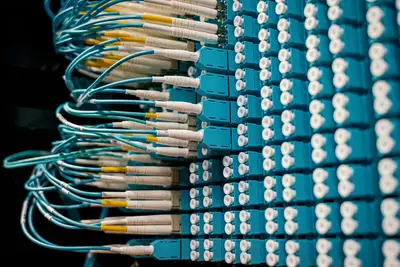
A technician stands before a massive server rack, adjusting a single cable while an automated dashboard flashes various performance metrics. In these environments, achieving perfect coverage is often impossible due to physical constraints or hardware limitations.
According to Wikipedia, for complex, real-world structures, covering 100% of an inspection target is not feasible. Instead, generating an inspection plan is often viewed as a multiobjective optimization problem.
This means the system must simultaneously aim to maximize coverage and minimize time and costs. AI network optimization uses these principles to find the best possible balance in unpredictable environments.
In this sequence, the second point is the most extensive.
How does automated network tuning actually work?
Late at night, the engineer leans forward to touch the warm casing of the router as the automated network tuning begins. An engineer monitors a screen where a software agent shifts wireless frequencies in real-time to avoid interference. The agent is not just moving data; it is solving a puzzle of resource allocation.

Smart network control relies on these mathematical models to make decisions. Instead of seeking a single perfect setting, the system seeks an optimal state that satisfies multiple requirements at once.
This approach ensures that the network remains stable even when physical obstacles prevent perfect signal distribution.
In this sequence, the second point is the most extensive.
How does data driven network solutions solve coverage issues?
A technician walks through a large warehouse, noting how signal strength fluctuates between metal shelving and concrete walls. The goal is to ensure every corner is reachable without overspending on hardware.
Data driven network management treats the deployment as a resource management task. Because total coverage is often unachievable, the system focuses on maximizing the useful area while keeping costs low.
This strategy prevents the waste of resources on areas that do not require high-density connectivity.
In this sequence, the second point is the most extensive.
Can I use network optimization AI for my planning? A designer sits at a desk, running a software simulation that shows a digital map of a building covered in colored heat zones. The simulation tests different antenna placements before a single bolt is turned.
Simulating network optimization AI allows planners to test various scenarios before physical deployment. By treating the network as a multiobjective optimization problem, planners can visualize how much coverage they can gain for every dollar spent.

This prevents the common mistake of over-engineering a solution that cannot be fully realized in the real world.
In this sequence, the second point is the most extensive.
What are the practical steps for optimization?
A network administrator sits at a console, executing a sequence of commands to deploy a new optimization script. The process requires careful planning to ensure the transition does not disrupt existing traffic.
To apply these concepts to a deployment, follow these steps:
- Define the primary objectives, such as maximizing coverage or minimizing latency, to establish the parameters of the optimization problem. 2. Analyze the physical environment to identify constraints that prevent 100% coverage. 3. Implement an automated plan that seeks to balance these competing objectives. 4. Perform a final check to ensure the chosen balance meets the minimum operational requirements.
I once spent an entire afternoon adjusting access points in a high-density office, only to realize that the physical layout made perfect coverage impossible regardless of the settings.
- Collect real-time telemetry data from network nodes.
- Apply machine learning models to identify interference patterns.
- Deploy automated parameter adjustments to stabilize the signal.
What are the limitations of AI network optimization?

A worker looks at a coverage map where a small dead zone remains visible despite the most advanced software. The map shows that while the coverage is high, it is not absolute.
A significant limitation is that for complex, real-world structures, covering 100% of an inspection target is not feasible. Optimization is about finding the best possible balance rather than achieving perfection.
In this sequence, the second point is the most extensive.
The same subject is also called AI network performance.
This part also covers AI network optimization case studies.
This part also covers Network performance improvement AI.
AI network optimization case studies
Related
- IoT network segmentation guide: VLAN for IoT isolation
- VLAN Home network design: Logic for device grouping
How does the optimization process compare to simple coverage mapping?
The optimization process differs from simple coverage mapping because the latter only shows where a signal exists, while the former seeks the most valuable distribution of that signal.
Simple mapping presents a static picture of reach, whereas optimization actively weighs the cost associated with extending that reach. This comparison highlights that the goal shifts from mere presence to efficient presence within the complex structure.
When must we prioritize cost over coverage?
Prioritizing cost over coverage becomes necessary when the marginal benefit of extending coverage to a small, difficult-to-reach area does not justify the increased time and expense. The multiobjective optimization framework allows the system to make this calculated sacrifice.
It recognizes that achieving a slightly lower coverage percentage might result in a significantly lower operational cost.
The inherent limitations of achieving total coverage mean that the system must constantly evaluate the trade-off between the ideal state and the practical constraints of the complex environment. This evaluation is the core function of the AI network optimization.
When applying the practical steps, the analysis of the physical environment must specifically catalogue areas where the constraints make 100% coverage impossible.
This step informs the subsequent implementation of the automated plan, guiding it toward a realistic, optimized outcome rather than an unattainable one.





Comments 0